What is Anti Surge Power (Peak Power)?
Note: This article is summarized from our team's daily technical support experience. We strive for accuracy and welcome your feedback or corrections.
What is Anti Surge Power (Peak Power)?
In the world of portable power stations, the term “Anti-Surge” (or Surge Protection) is actually the opposite of providing Surge Power.
While Surge Power is about the station giving a burst of energy, Anti-Surge is about the station defending itself and your electronics from dangerous spikes.
1. Anti-Surge vs. Surge Power (The Simple Distinction)
-
Surge Power (Peak Power): The “Outbound” boost. It is the ability of the power station to output extra watts (e.g., 2000W) for a second to start a fridge or motor.
-
Anti-Surge (Surge Protection): The “Inbound” shield. It is the safety circuitry (BMS) that blocks or absorbs sudden, unexpected voltage spikes from entering and frying your sensitive electronics.
2. How Anti-Surge Protection Works
Inside a high-quality power station, the BMS uses components like MOVs (Metal Oxide Varistors) or TVDs (Transient Voltage Diodes) to act as “pressure relief valves” for electricity.
-
Blocking Voltage Spikes: If a spike occurs (from a lightning strike nearby or a grid fluctuation during charging), the anti-surge circuit detects the “over-pressure” and diverts the excess energy away from your plugged-in devices (like your laptop or TV).
-
Cleaning the Signal: High-end stations provide “Pure Sine Wave” output with anti-surge filtering, which “smooths out” the electrical noise that can cause flickering screens or buzzing speakers.
3. Why is Anti-Surge “Peak Power” used sometimes?
Sometimes, marketing materials use “Anti-Surge Peak Power” to describe the maximum spike the station can survive without being damaged.
-
Example: A station might have a 4000W Anti-Surge limit. This means if a motor tries to pull more than 4000W, the “Anti-Surge” safety feature will instantly trip the circuit breaker to prevent the inverter from exploding.
VS Table
| Feature | Surge Power (The Muscle) | Anti-Surge (The Shield) |
| Direction | Power flowing OUT | Power flowing IN (Safety) |
| Goal | To start a motor/compressor | To prevent a fire or fried circuit |
| Example | Helping a fridge kick on | Protecting a laptop from a grid spike |
| Measured In | Watts (W) | Joules (J) or Watts (W) |
Key Takeaway
If a power station advertisement says “2000W Surge Power,” it’s telling you it’s powerful.
If it says “Anti-Surge Protection,” it’s telling you it’s safe.
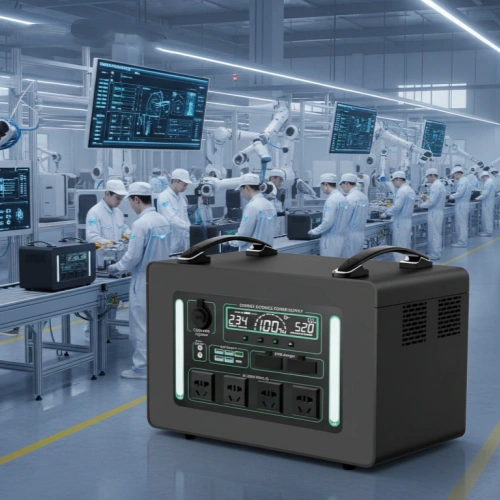
2026 Newest&Economic Portable Power Station built-in Anti-Surge Protection tech