
What is a Portable Power Station?
Note: This article is summarized from our team's daily technical support experience. We strive for accuracy and welcome your feedback or corrections.
What is a Portable Power Station?
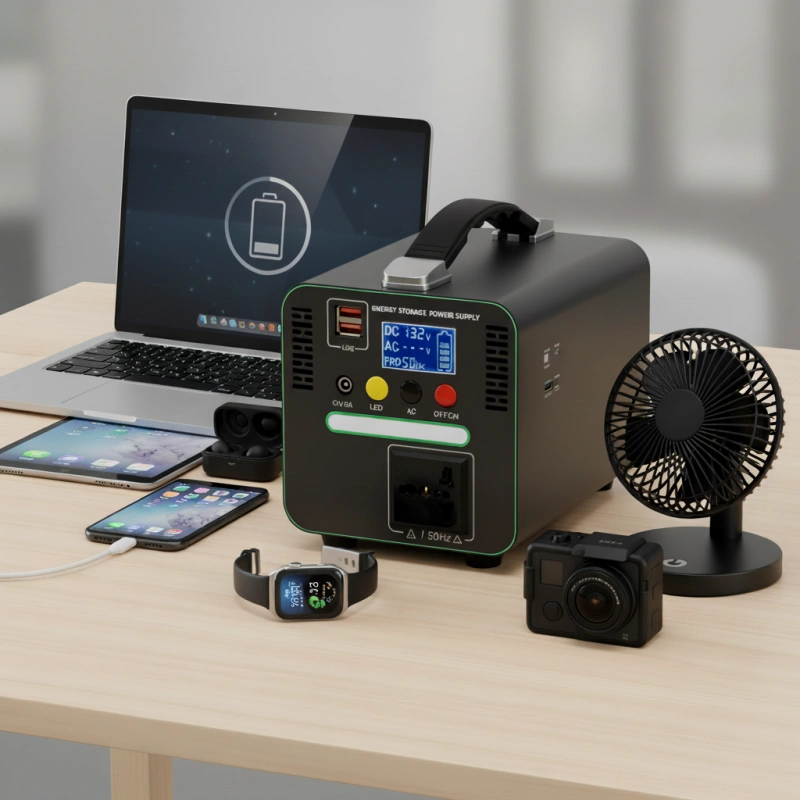
A Portable Power Station (PPS) is essentially a high-capacity, rechargeable battery housed in a protective case with built-in power electronics.
Think of it as a giant “power bank” for your house or campsite, but instead of just USB ports, it features standard AC wall outlets, DC car ports, and sometimes even specialized solar inputs.
Here is a breakdown of what makes it work and why it’s popular:
1. How It Works (The “Brain” and “Body”)
A PPS is made up of three main components:
-
The Battery (Storage): Usually Lithium-ion or LiFePO4 (Lithium Iron Phosphate). LiFePO4 is the modern standard because it is safer and can last for 10+ years of daily use.
-
The Inverter (Converter): This converts the stored DC (Direct Current) battery power into AC (Alternating Current), which is the type of electricity used by your home appliances like blenders, laptops, and fans.
-
The BMS (Battery Management System): The “brain” that protects the unit from overheating, overcharging, or short-circuiting.
2. How Do You Charge It?
The “Portable” part comes from its versatility in “re-fueling”:
-
Wall Outlet: The fastest way, usually taking 1–2 hours for modern units.
-
Solar Panels: Turns the PPS into a Solar Generator, allowing for 100% off-grid power.
-
Car Charger: Charging via the 12V “cigarette lighter” port while driving.
3. Key Metrics to Know
When looking at a PPS, you will see two main numbers:
-
Capacity (Watt-hours / Wh): Tells you how much energy is inside (e.g., a 500Wh unit can run a 50W fan for 10 hours).
-
Output (Watts / W): Tells you how powerful of a device it can start (e.g., a 1000W unit can run a toaster, but a 300W unit cannot).
4. Why is it different from a Power Bank or a Generator?
| Feature | Power Bank | Portable Power Station | Generator (Gas/Diesel) |
| Main Use | Phones/Tablets | Laptops, Fans, CPAPs, Mini-fridges | Houses, Power tools, Air cons |
| Outlets | USB only | USB + AC Wall Outlets + DC | AC Wall Outlets |
| Indoor Use | Yes | Yes (Safe & Silent) | No (Exhaust & Noise) |
| Energy Source | USB Wall plug | Wall, Solar, or Car | Fuel (Gasoline/Diesel) |
5. Who is it for?
-
Outdoor Enthusiasts: For camping, “van life,” or overlanding to keep lights and fridges running.
-
Emergency Preparedness: To keep the Wi-Fi router, phone, and a lamp on during a blackout.
-
Remote Workers: To power a laptop and secondary monitor in a park or a coffee shop without outlets.
-
Medical Needs: Providing silent, reliable backup for CPAP machines.
Would you like me to help you calculate what size (Wh) power station you would need for your specific devices?
