What’s OVP (Over-Voltage)?
Note: This article is summarized from our team's daily technical support experience. We strive for accuracy and welcome your feedback or corrections.
What’s OVP (Over-Voltage)?
OVP (Over-Voltage Protection) is a fundamental safety mechanism in power stations, battery chargers, and electronic devices.
Its primary goal is to cut off the power supply when the voltage rises above a specific “safe threshold.”
Without OVP, excessive voltage can overwhelm electrical components, leading to smoke, permanent damage, or even fire.
1. How OVP Works in a Power Station
In a portable power station, OVP is managed by the BMS (Battery Management System). It acts like a digital gatekeeper:
-
Monitoring: The BMS constantly measures the voltage of the battery cells and the incoming power from a charger or solar panel.
-
Triggering: If you plug in a faulty charger or a solar panel that outputs 30V when the station only supports 25V, the OVP circuit detects this “pressure” immediately.
-
Action: Within milliseconds, the BMS slams the electronic switch (MOSFET) shut, disconnecting the battery from the power source to prevent an explosion or cell damage.
2. Common Causes of Over-Voltage
-
Lightning Strikes: A nearby strike can send a massive voltage spike through the electrical grid and into your charging station.
-
Incorrect Solar Panels: Connecting solar panels in Series instead of Parallel can double the voltage, often exceeding the station’s OVP limit.
-
Faulty Chargers: If an AC adapter’s internal regulator fails, it might send the full rectified voltage (which is much higher than intended) into your device.
-
Inductive Kickback: Large motors (like a power drill) can “kick” voltage back into the power station when they are suddenly turned off.
3. OVP vs. UVP (The Opposites)
You will often see OVP listed next to UVP. Here is how they compare:
| Feature | OVP (Over-Voltage) | UVP (Under-Voltage) |
| Danger | Frying components / Fire | Permanent battery death |
| Trigger | Voltage is Too High | Voltage is Too Low |
| Typical Action | Disconnects the Charger | Disconnects the Load (Appliance) |
| Goal | Safety and component protection | Preventing “Deep Discharge” |
4. What should you do if OVP is triggered?
If your power station screen shows an “OVP” error or simply shuts down while charging:
-
Unplug the source: Immediately disconnect the solar panel or charger.6
-
Check the specs: Look at the “Input Voltage” range on the back of your power station and compare it to the “Open Circuit Voltage (Voc)” of your solar panel.
-
Reset: Most modern stations will automatically reset once the high-voltage source is removed. Some may require you to hold the power button for 10 seconds.
Are you seeing an OVP error on your screen right now?
If you tell me the model of your power station and what you were charging it with, I can help you troubleshoot the connection.
Deep dive into Battery Management System protections
This video explains how a BMS uses OVP and other protection layers to keep lithium battery cells within their safe operating area.
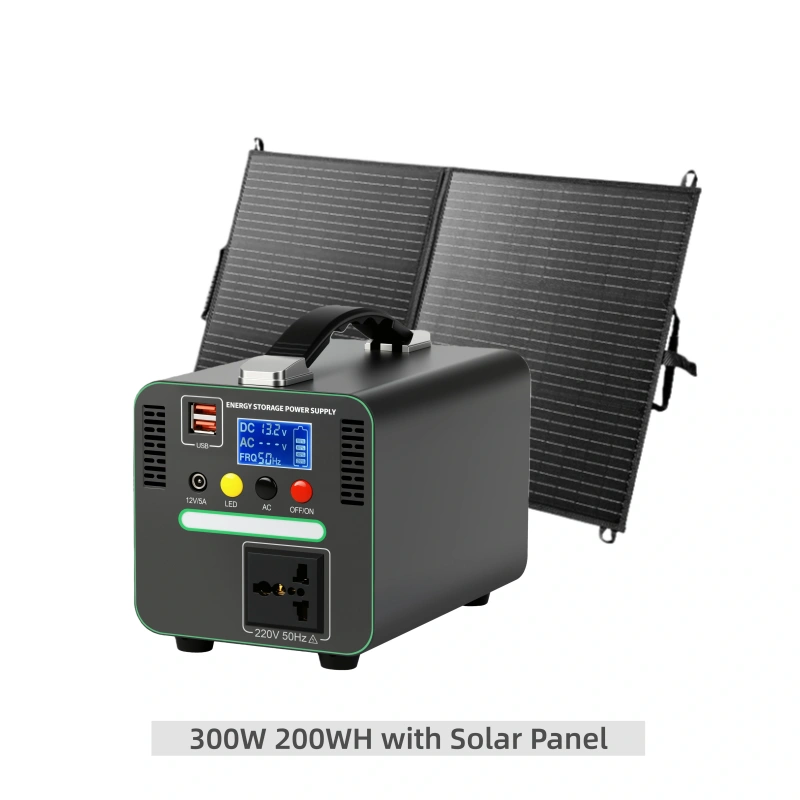
2026 Newest&Economic Portable Power Station built-in OVP (Over-Voltage)
Learn more and contact us: [email protected]